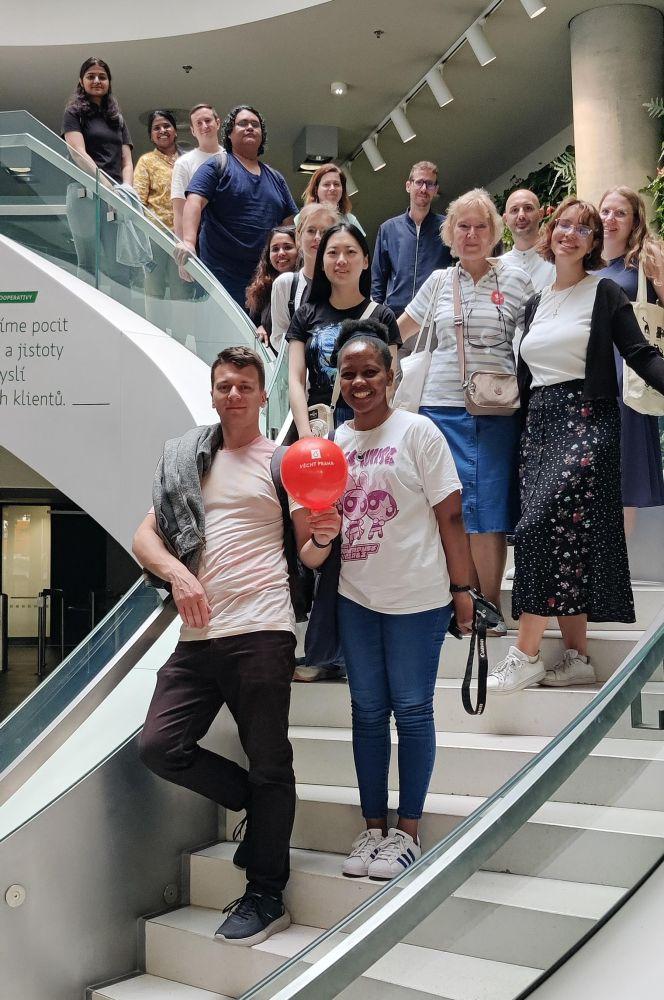





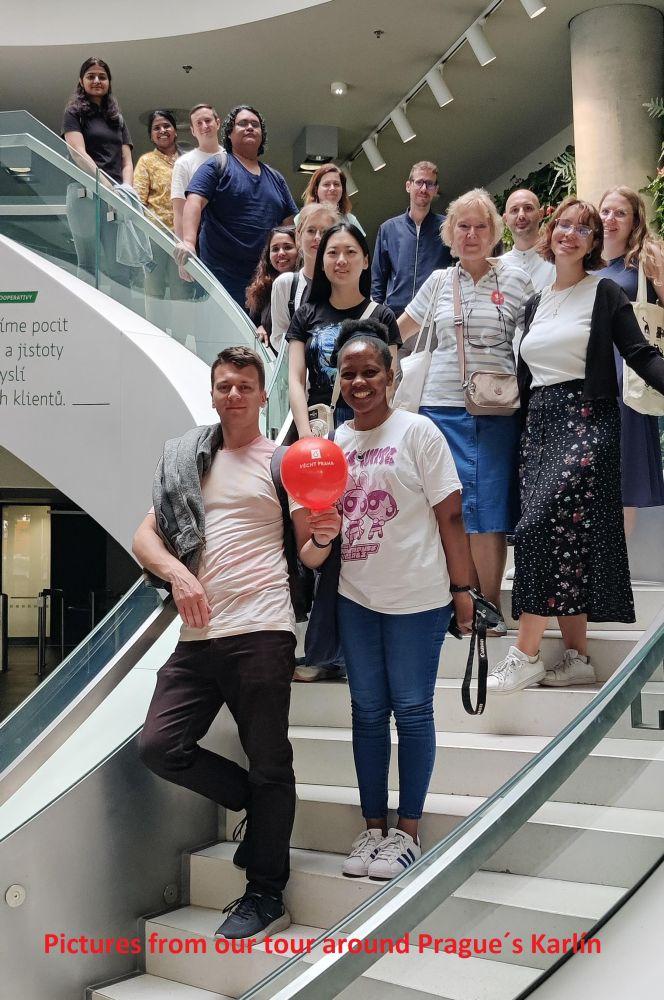
Pictures from our tour around Prague´s Karlín
2. 6. 2025
Jan Kříž
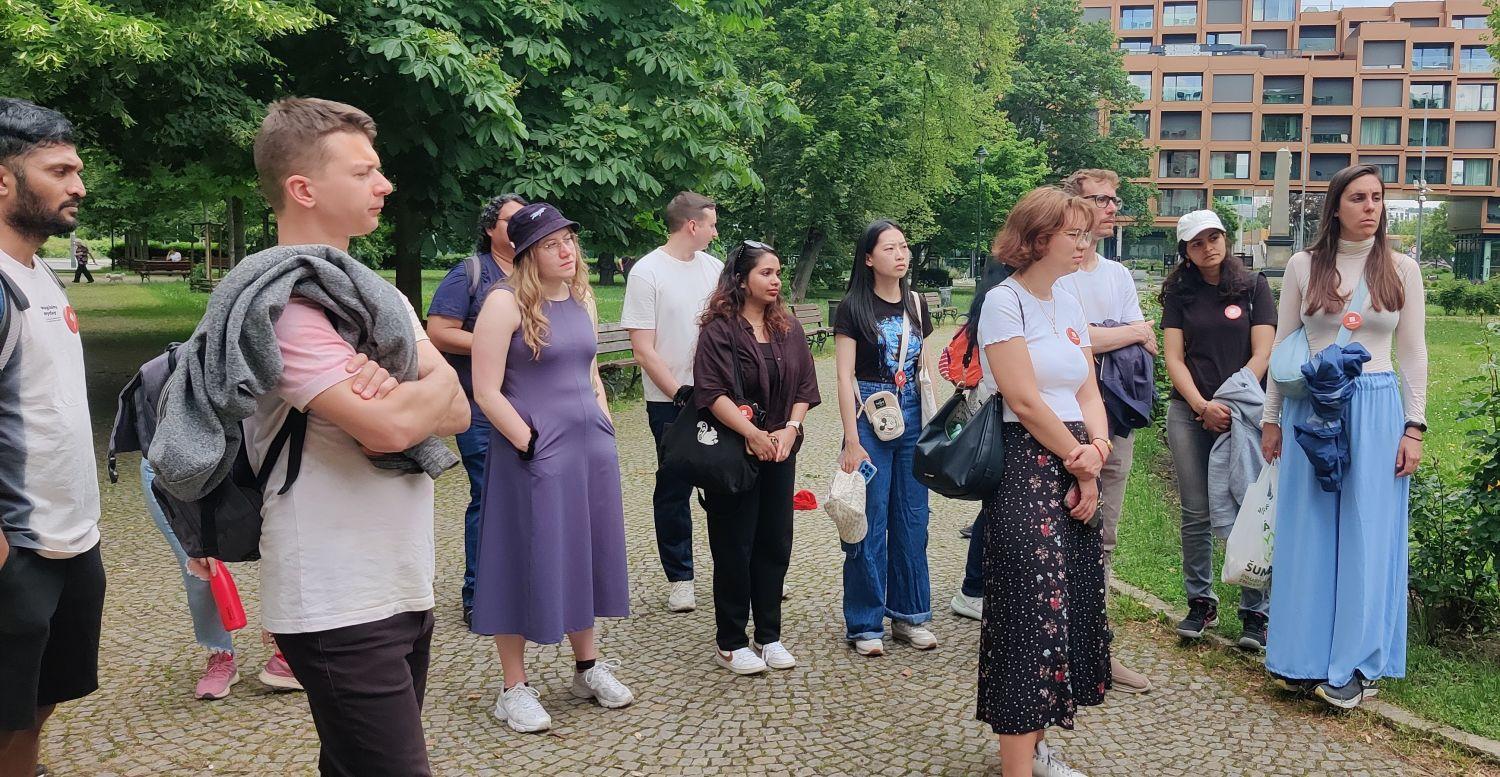
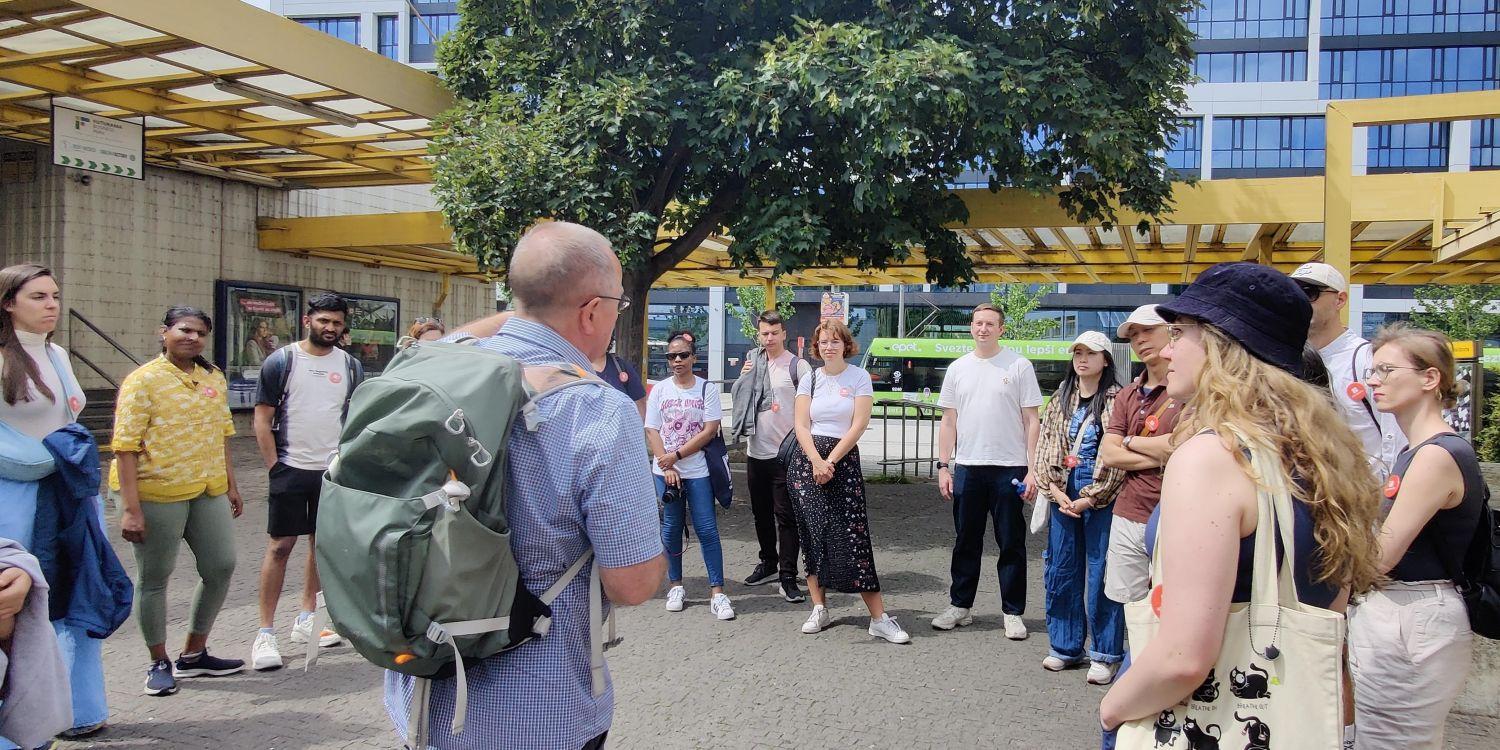
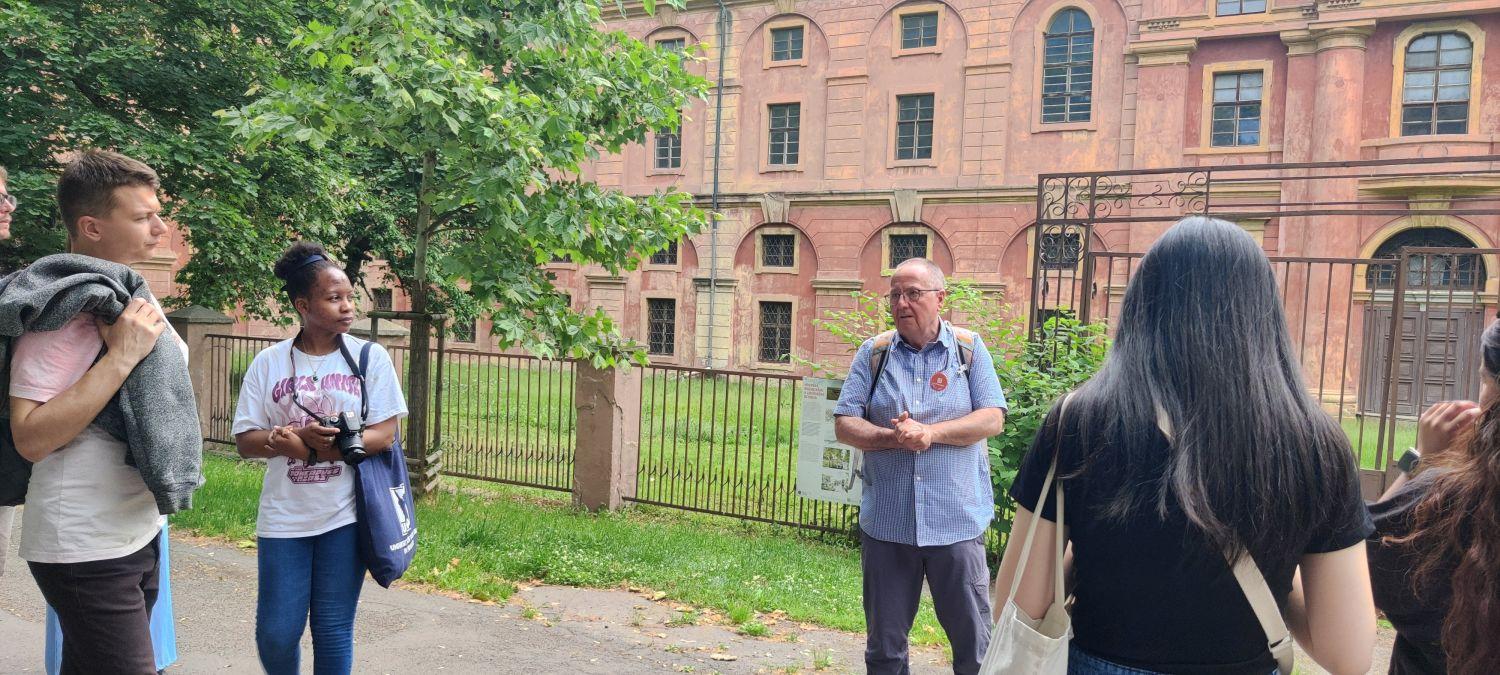
On the 31st of May 2025, on a Saturday afternoon, we took a guided tour with our international researchers and students around the city district of Karlín, which used to be a well-developed industrial outskirts of Prague in the 19th and 20th centuries.
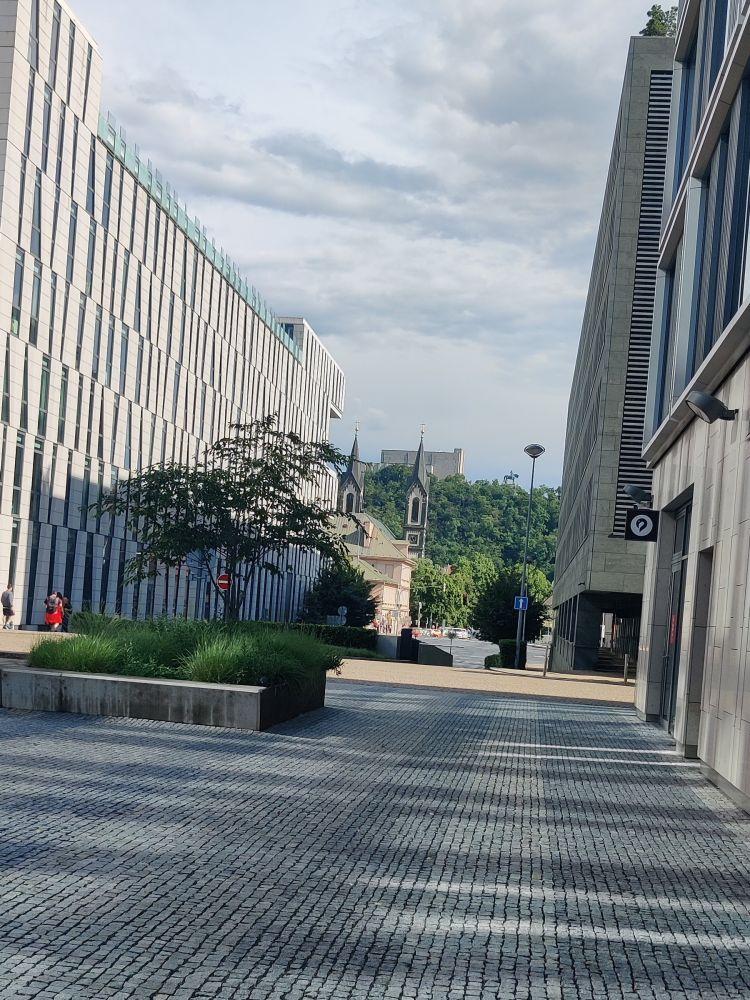
Over the last 40 years, it has undergone a large transformation. Many of the outdated manufacturing plants have ceased production, and new houses serving both residential and business purposes have been built on the sites of brownfields. However, historically valuable buildings built in Baroque or Art Nouveau style were preserved.
After catastrophic floods in 2002, this Prague district paradoxically became a sought-after area for developers, who built entire new complexes of interesting and architecturally acclaimed buildings here.
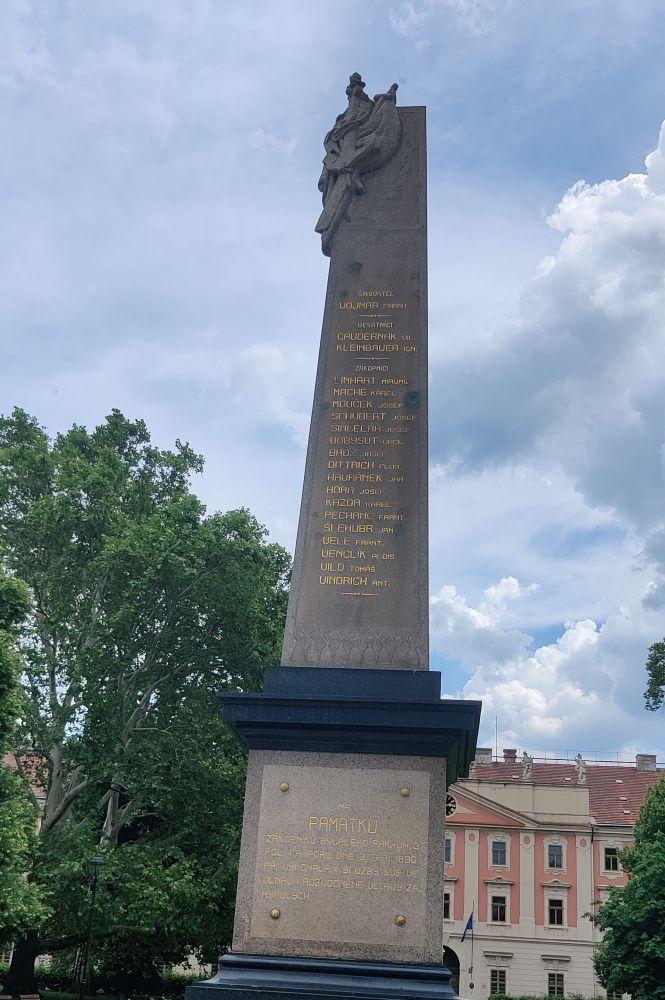
We started our tour at the metro station Invalidovna, which is named after the Baroque complex of buildings designed and built by Kilian Ignaz Dientzenhofer in 1731-1737, modeled after the Hôtel des Invalides in Paris for war invalids. Since 2017, it has been protected as a national cultural monument.
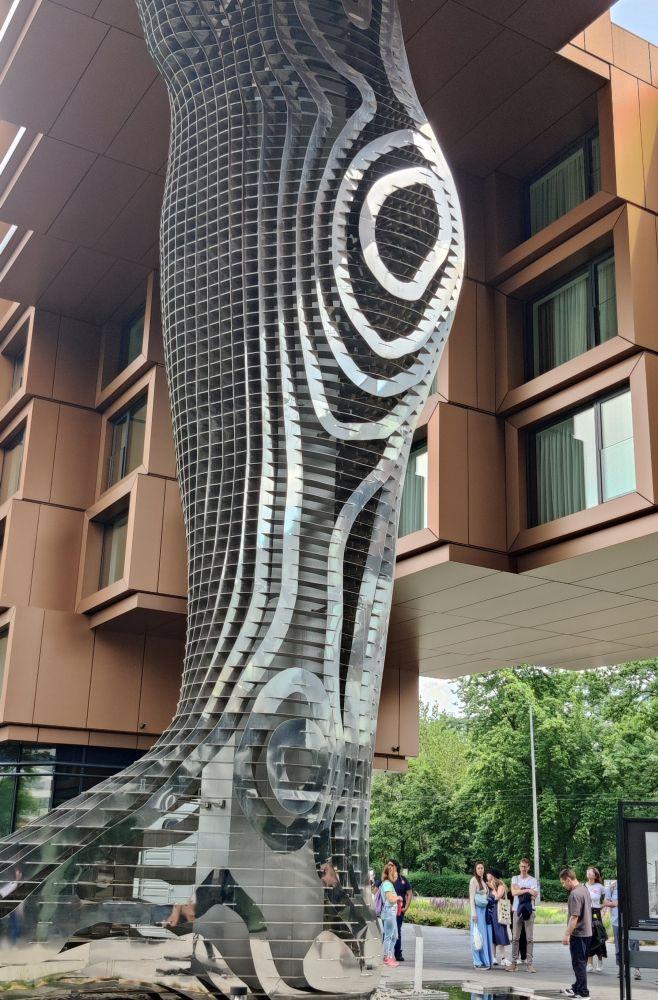
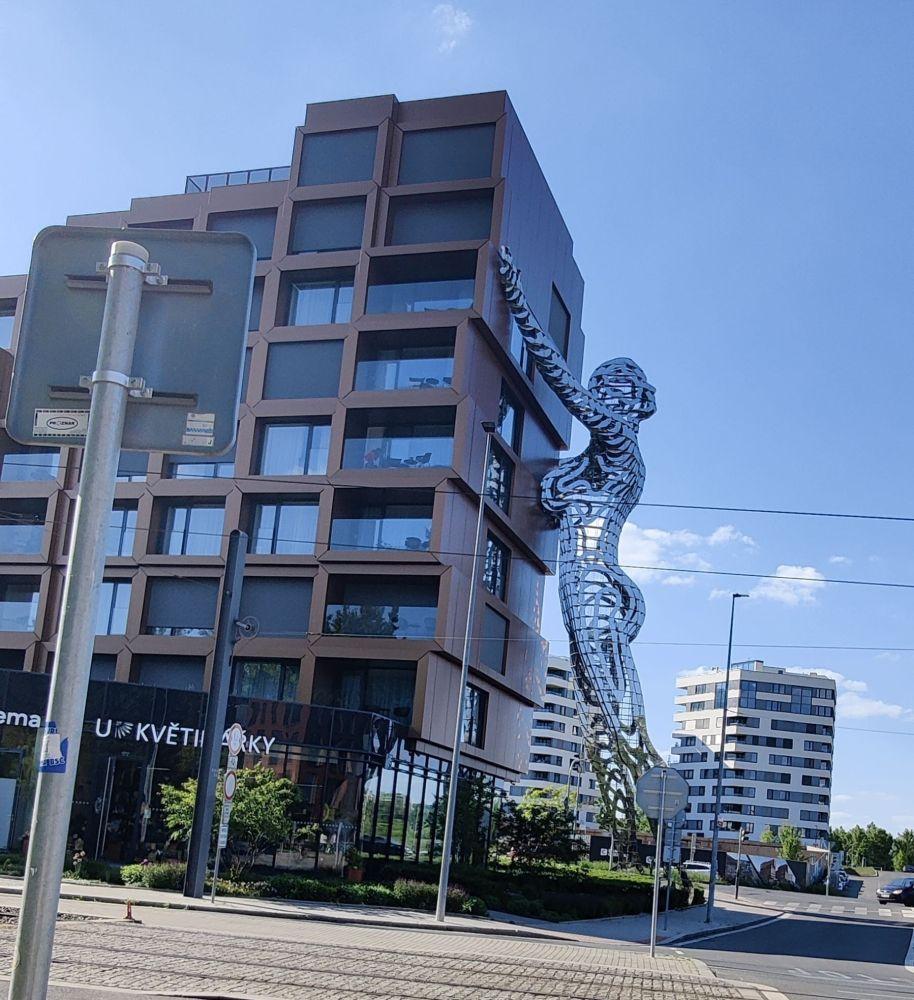
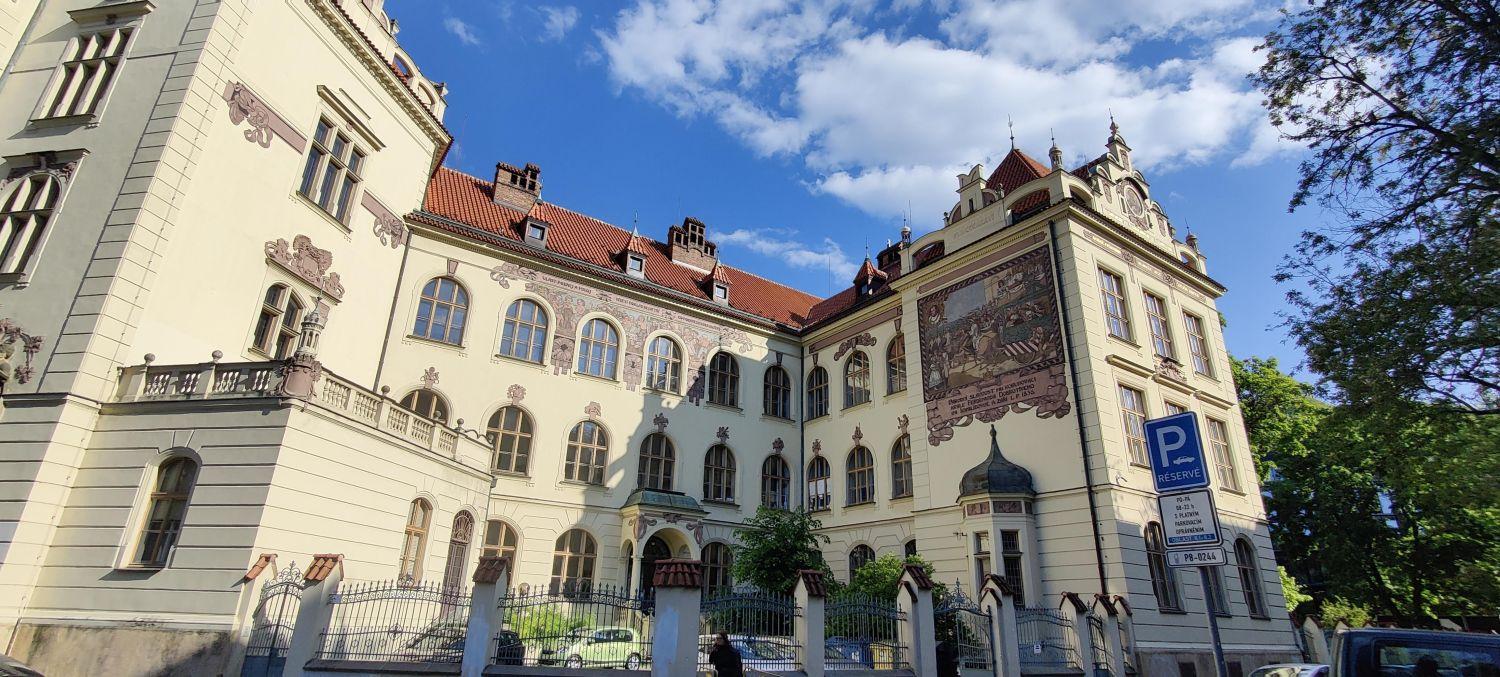
We toured a new apartment complex that attracts attention with a giant steel statue of the mystic woman Lilith by sculptor David Černý. We continued to Lyčkovo náměstí with wonderful Art Nouveau apartment houses and an adorable building housing primary school and kindergarte. The building is dated to 1904, there are interesting frescoes on the facade symbolizing historical scenes and traditions of schooling.
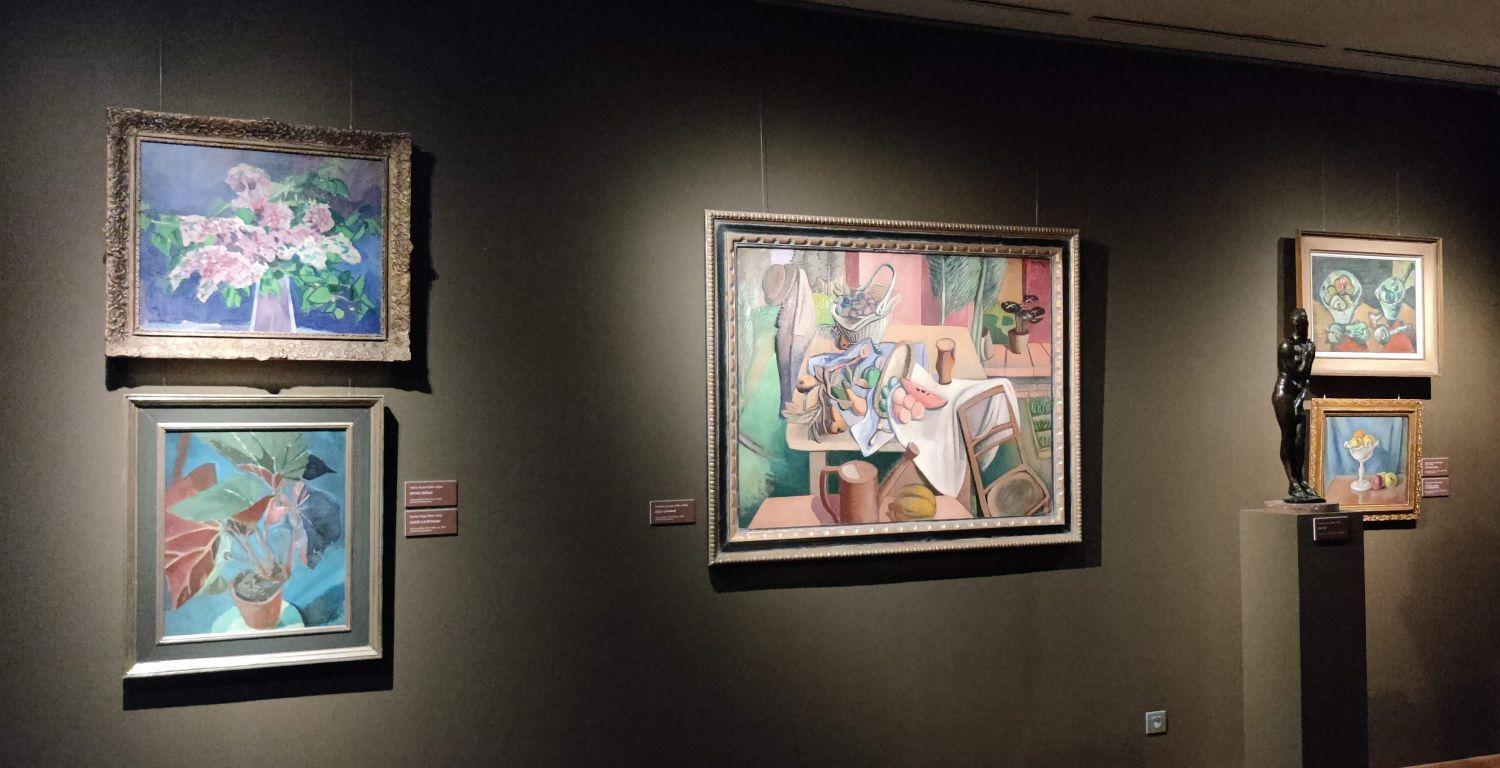
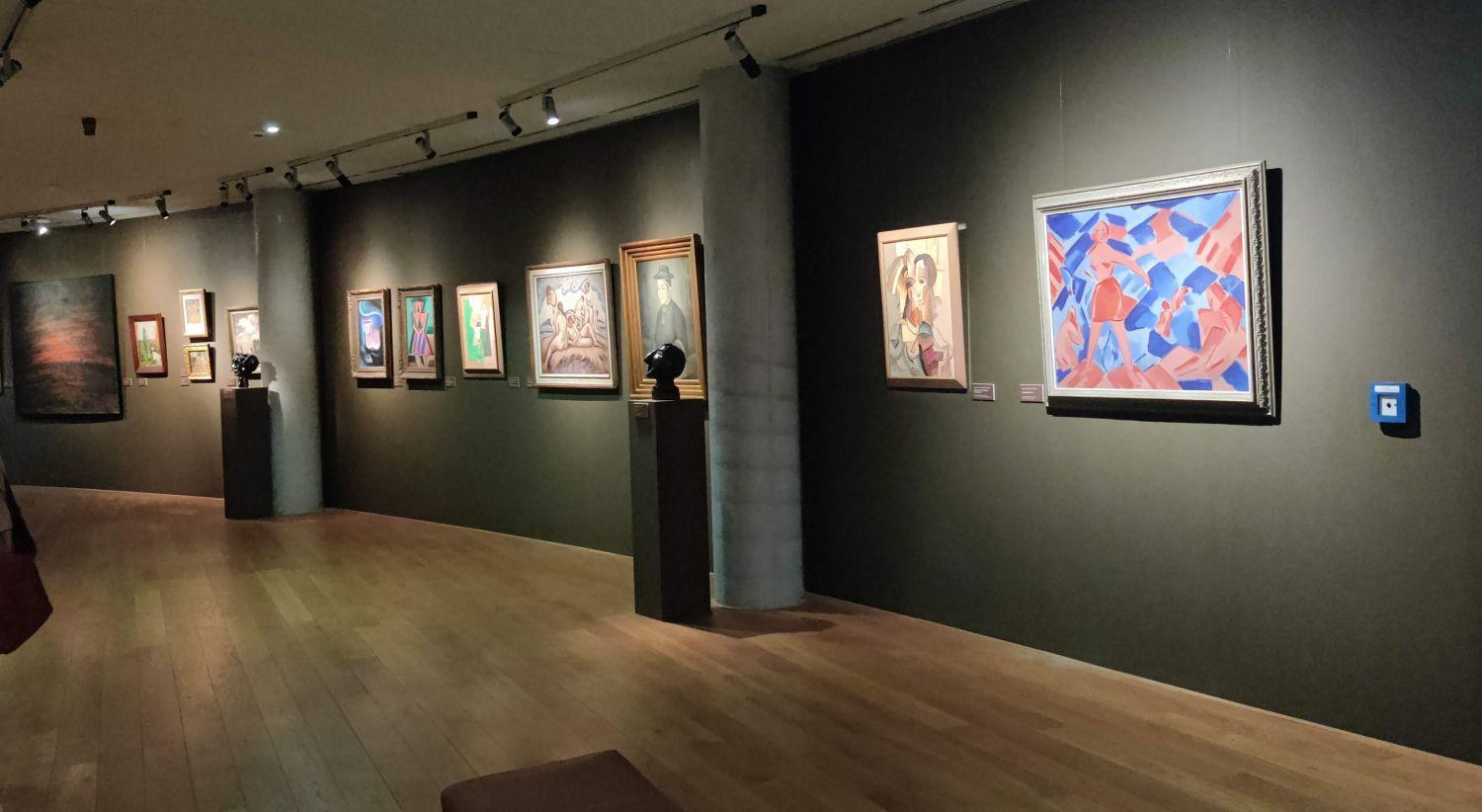
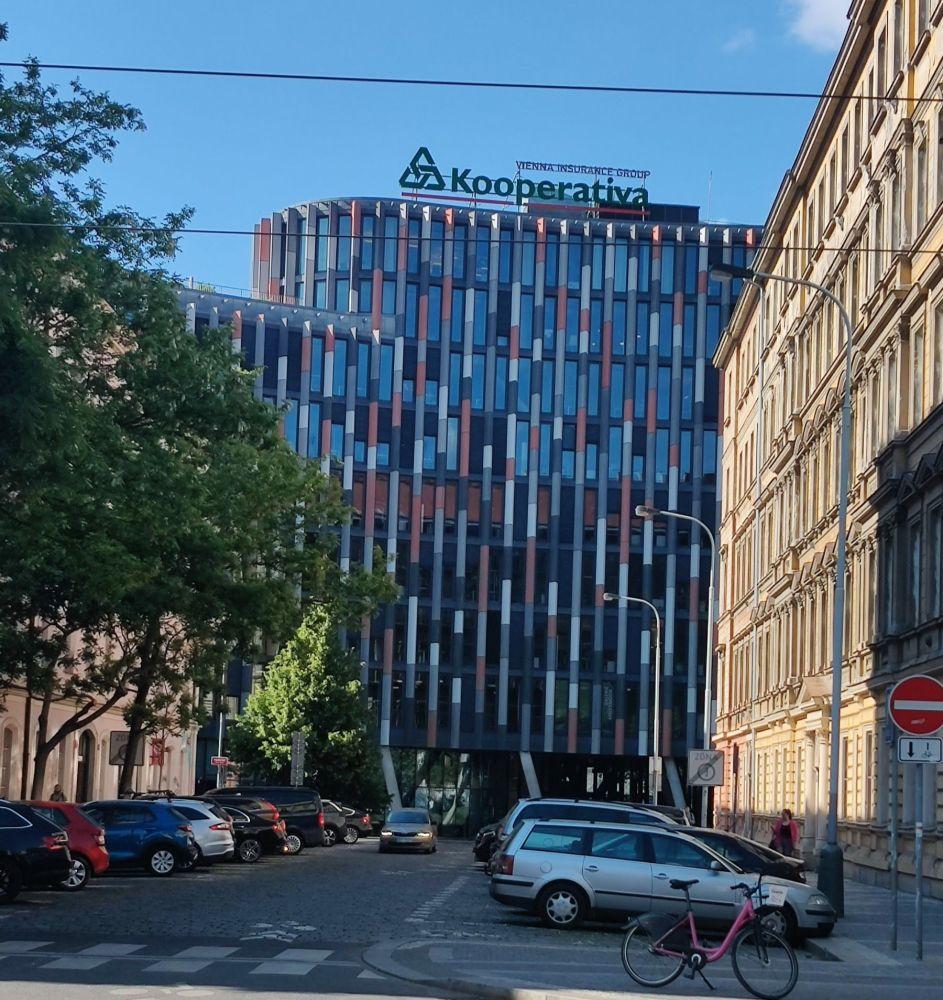
We planned to visit the Church of St. Cyril and Methodius, but due to the approaching rain and storm, we took shelter in the new building of the Czech Kooperativa insurance company and visited its gallery with an exhibition of paintings by Czech artists of the early 20th century, while enjoying some coffee and sweets.
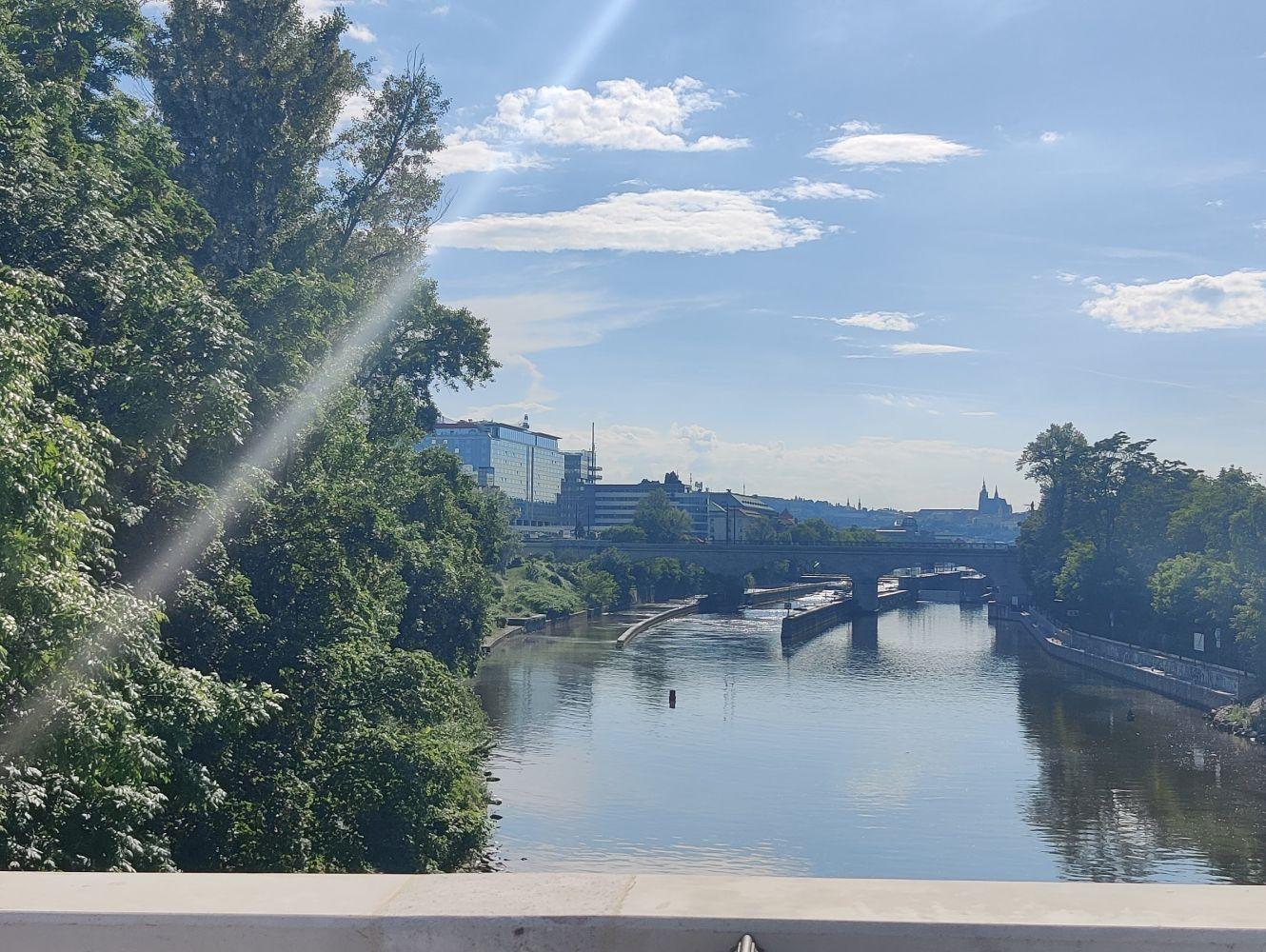
After the storm passed, we continued to the Rohan Embankment, where we spoke about the historical railway Negrelli Viaduct, the longest railway bridge in Prague, crossing the river. It was built in the mid-19th century and is still in use today. We crossed the river Vltava on the footbridge HolKa, with a view of the river, the island Štvanice, and a panorama of Prague Castle.
We enjoyed this tour!